Ho tolto un esempio che confondeva un diritto del cliente con una richiesta effettiva.
Ho poi reso espliciti due passaggi: confrontare le opzioni quando il cliente chiede
«la più economica» e comunicare che una modifica non è ancora stata
eseguita prima di chiedere conferma.
le tre frasi nel prompt, come le legge l’agente
Il prompt finale è in inglese. In evidenza le frasi che hanno corretto le tre famiglie di fallimento.
Serve what they asked for, and ONLY that: something the <policy> permits, or that they are entitled to - a free checked bag, a compensation, an upgrade they qualify for - is not something they asked for. An entitlement is not an instruction. If they did not ask for it, do not add it and do not offer it.
When the customer DESCRIBES what they want instead of naming it - "the cheapest", "anywhere on the west coast", "either airport" - that description is a search, not an instruction to take the first thing that fits. Search every combination the description allows, list the candidates you found with the number that decides between them, and choose by comparing those numbers. Write the list out before you choose.
Open that message with exactly this line, on its own:
I have not made any of these changes yet - I need your go-ahead first.
It matters because this message reads like a receipt, and a customer who thinks the work is already done will end the call before you can do it. Nothing is done until you call the tools.
Estratti da patches/tau2-custom-agent.patch, sezioni PROCEDURE e CONFIRMATION_FORMAT.
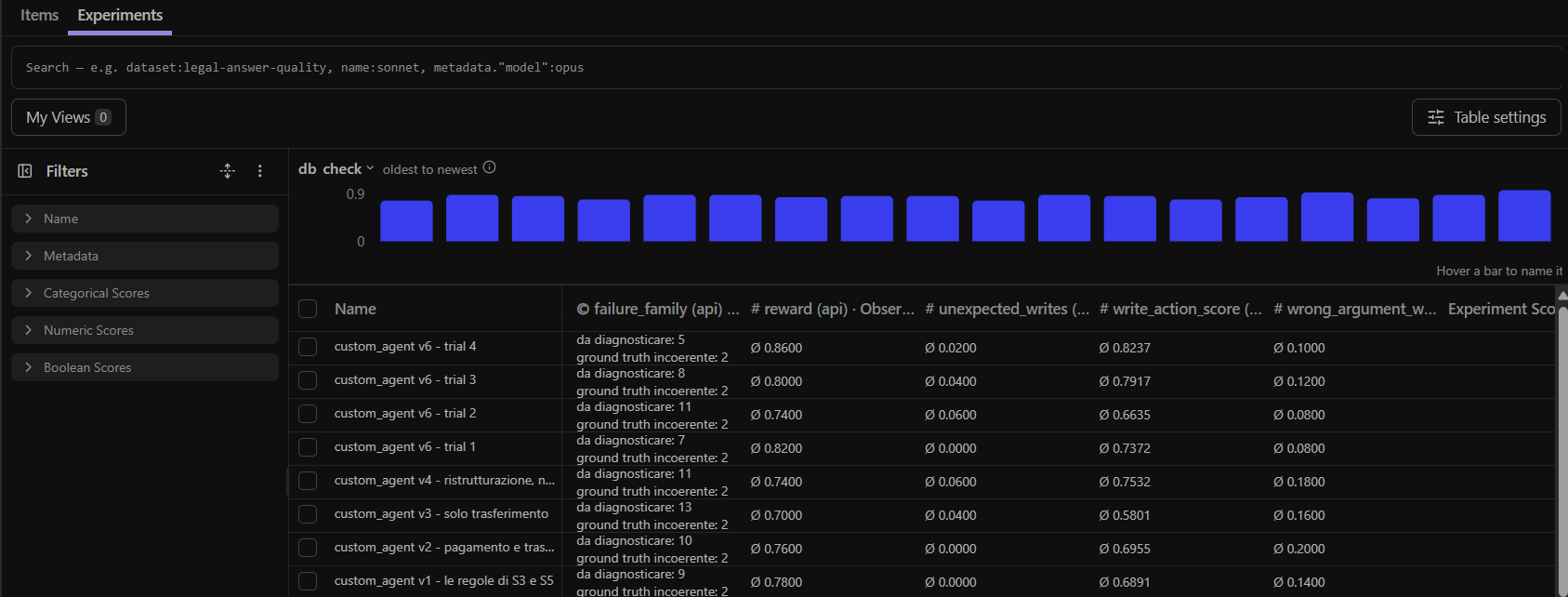
Prima di ogni prova ho annotato quali task mi aspettavo cambiassero. Le esecuzioni
successive hanno permesso di confrontare la previsione con il comportamento osservato.